Student Introduction

Interview, in groups of three, one of your classmates and prepare to report the following information to the rest of the class:

Course goals for 20th-Century Civilization I / The Modern Experiment


- What are the common experiences of modernity?


- How do different mediums and genres (political manifesto, drama, nonfiction prose, novel, poetry, music, as well as film, painting, and other visual mediums) come to inform modernity?


- Unit I—Vestiges of the Nineteenth Century: Work and the Bourgeois Family (Marx, Freud)


- Unit II—Modern Identities: Work, Family, and the Metropolis in Literature and the Arts (Kafka, Pirandello, Woolf, midterm)


- Unit III--The Great War and its Aftermath (reading and writing for research projects, occasional texts on major modern movements)


- Seminar for first-year Honors students


- Introduction to interdisciplinary research methodologies (history, literature, psychology, philosophy, and political science)


- Query of the origins of modern disciplines like history, literature, psychology, philosophy, and political science (the “liberal arts”)


What are disciplines?


1. Discipline is defined as membership to a select community; a history of training; a culture of rules, order, and regulation; and of course restraint.


2. Academic disciplines up to 1900: theology, law, and medicine


What is modernity? 


- Etymology: Late Latin modernus, from Latin modo (just now), from modus (measure)


- 1900-1939 (before WWII)


- Modernism: self-conscious break with the past and a search for new forms of expression


- IN CLASS WRITING: What is modern about the early 21st century? What cultural objects and practices define modernity now?


1. "Modernity exists in the form of a desire to wipe out whatever came earlier, in the hope of reaching at least a point that could be called a true present, a point of origin that marks a new departure." -- Paul De Man (1919–1983), Belgian-born U.S. literary critic.


2. “'Modernity' signifies the transitory, the fugitive, the contingent, the half of art of which the other half is the eternal and the immutable." Charles Baudelaire (1821–1867), French poet, critic.


3. "By Modernism I mean the positive rejection of the past and the blind belief in the process of change, in novelty for its own sake, in the idea that progress through time equates with cultural progress; in the cult of individuality, originality and self-expression." -- Dan Cruickshank (b. 1949), British architectural critic.


Review of Lecture 1


Course / student introduction--20th-century Civilization I / "The Modern Experiment"

- Opportunity, in final research project, for students to pursue personal interests (music, philosophy, economics, the plastic and visual arts, musical movements/groups)

- Focus: Early 20th-century European writers, artists, and thinkers

- 10 years ago: "Western Civilization"

- Unit I: Politics, economics, technology, law, psychology, and critical terms for the humanities (Marx, Freud)

- Unit II: Kafka, Woolf, Pirandello

- Unit III: Research project and artistic manifestos, field trip


What is modernity?

- Seminar participants' definition: Technology, communications,  business

- General definition: contemporary, recent (see above)

- Specific movement: Modernism (1910-1930)

- 2003 (early 21st century) = postmodernism


What is "Modernism" in the disciplines?--1910-1930

- Literature / Visual Art / Philosophy:
- Politics / Economics / Technology / Law: Marxism, Socialism, Fascism, factory production, mass consumers

- Natural Sciences / Biology / Medicine / Psychology: Genetics, biological determinism, psychoanalysis (Jung, Freud), psychedelics (A. Huxley)


Review of L. 3


Topics: Hegelian dialectics, materialism, and religion

What is Marxist critique?

- Redirection of debates about idealist philosophy to the material condition of the worker.
- Also a mode of seeing the world – dialectical view of history

Lingering Questions Not Answered by Lecture

- How do we distinguish Socialism from Communism?
- Is it possible to be an individual under Communism?
- Is Communism democratic?
- Important question raised: Is fascism inherent to Communism?


Review of L. 4

Capital

Use-value is the qualitative aspect of value, i.e., the concrete way in which a thing meets human needs (linen to keep warm)

Fetishism, in ancient religions, meant the belief that inanimate objects such as icons or trees, clouds, etc., possess human properties; in Marxism, the belief that commodities possess human properties (Diamonds, gold, objects without any concrete use-value)

A commodity is something that is produced for the purpose of exchanging for something else, and as such, is the material form given to a fundamental social relation — the exchange of labor. Marx saw the commodity as the “cell” of bourgeois society (i.e., capitalism) in that it encouraged the buying and selling of relationships.

Exchange-value (or, simply, value), is first of all the ratio, the proportion, in which a certain number of use-values of one kind can be exchanged for a certain number of use-values of another kind. (Lenin) Labor has exchange-value.

Capital and the 20th Century

- How does modern work impact our lives?

- How do commodities define our identities?

- Is modern civilization just a sum of exchange-value relationships?


Review of L. 5

Marx, On the Jewish Question

- Model of typical Marxist critique (twisting of another author’s words to point out the need for a dialectical materialist view of social issues)
 
- Underlines the relevancy of the “religion” question to his plan for Communism

- Reminds us of the fixed notions of (ethnic, religious, cultural) identity in the late nineteenth and early twentieth centuries that led to global catastrophe (WWII)


Engels, Family

- Model for alternate mode of historical critique

- Bourgeois family uses woman as an economic tool, but it is not a love relationship. If society were not dependent on relations of ownership (capitalism), the family would change.

- Patriarchy is “unnatural” and exploitative; Rule by women is the “natural” state of society


Modernist Era History:

- WWI marked, as we’ll talk about in the third unit, by incomparable violence and bloodshed

- Secularization of the public sphere

- Revolutions (Ireland, Russia)

- Clash between socialist and fascist forces, culminating in major wars (Spanish Civil War, World War II)


Short History of the Russian Revolution

(modified from Robert Beard's chronology at Bucknell Univ.)

1861
Emancipation of the serfs
1872
  • Russian translation of Marx's Capital
  • 1876
  • Land and Freedom Party
  • 1877-1878
    March 3
    June 13
  • War with Turkey
  • Treaty of San Stefano
  • Congress of Berlin Begins


  • 1879
  • People's Will Party and Black Partition established


  • 1881 March 1
  • Assassination of Alexander II
  • 1881-1894 ALEXANDER III ROMANOV
    1884
  • Reactionary regulations for universities
  • 1891
  • Beginning of the Trans-Siberian railway
  • 1891-1893
  • Making of the Franco-Russian alliance
  • 1894-1917 NICHOLAS II * ROMANOV 
    1897 Jan 28
  • First all-Russian census counts 128,907,692 people
  • 1898
  • 1st Congress of the Russian Social Democratic Party (Minsk)
  • 1900
  • Boxer Rebellion; Russia occupies Manchuria
  • 1903
  • 2nd Party Congress (Brussels)
  • Split into Mensheviks and Bolsheviks
  • 1904
  • General strike in Tbilisi and Baku
  • 1904-1905
  • Russo-Japanese War
  • 1905
    January 22

    October 17
  • 1905 REVOLUTION: General Strike
  • Bloody Sunday
  • October Manifesto 
  • Potemkin Mutiny
  • 3rd Party Congress
  • Constitutional Democrats (Kadets) Program
  • 1906

    April
  • 4th Party Congress
  • First Duma
  • First Constitution (Fundamental Law)
  • 1906-1911
  • The Stolypin | Land Reforms
  • 1907
  • Second Duma
  • 5th Party Congress
  • Emergence of Triple Entente (France, Britain, Russia) against Triple Alliance (Germany, Austro-Hungary, Italy)
  • Third Duma
  • 1908
  • Trotsky becomes editor of Pravda in Vienna


  • 1911-1913
  • Balkan War


  • 1914
  • World War I begins
  • St. Petersburg renamed 'Petrograd'
  • 1916 Dec 16
  • Murder of Rasputin by Felix | Yusupov et al.

  • The Soviet Period


    1917 1917 REVOLUTIONS (February 23/March 8)  
       February
  • Duma convened
  • Bread riots and strikes in Petrograd
  •    March 15
  • Abdication of Nicholas II in favor of GP Mikhail
  • GP Mikhail transfers power to Provisional Government under Lvov
  • Dual Power (dvoevlastie) begins
  • Petrograd Soviet of Workers' Deputies Order No. 1
  • Kamenev and Stalin return from Siberia
  •    April
  • Finland Station: Lenin returns to Russia
  • Lenin's April Theses   
  •    May
  • Coalition Provisional Government
  •    June
  • Election of Constituent Assembly set for September 30
  •    July
  • Russian offensive against Germans
  • Uprising against Provisional Government
  • Prince Lvov resigns; Kerensky becomes premier
  • 6th Party Congress
  •    August
  • Kerensky becomes dictator
  • Constituent Assembly election postponed to November 25
  •    November
  • OCTOBER | REVOLUTION (October 25/November 7) 
  • Patriarchate re-established
  • Constituent Assembly elections begin
  •    December
  • Armistice negotiations at Brest-Litovsk December 2
  • Left SRs enter coalition with Bolsheviks
  • 1918-1924 VLADIMIR ILYICH LENIN 
    1918
       January
  • Constituent Assembly is dissolved
  •    February
  • Separation of church and state
  • Russia moves to the Gregorian Calendar (not the Church)
  •    March 3
  • Treaty of Brest-Litovsk (KOI8)
  • 7th Party Congress
  • British land at Murmansk
  •    April
  • Japanese land at Vladivostok
  •    June
  • Committees of the Village Poor established
  • Nationalization of industry
  •    July
       July 10
  • Intervention | begins
  • Lenin (RFSFR) Constitution ratified
  •    July 17
  • Murder of Tsar Nicholas II and his family in Ekaterinburg 
  •    August
  • American troops land in Vladivostok
  •    September
  • American troops land at Archangelsk
  •    November
  • End of World War I
  • Soviets repudiate Treaty of Brest-Litovsk (copy)
  • French troops land at Odessa
  •    December
  • British troops land at Batum

  • 1919
  • Founding of the Comintern
  •    March
  • Kolchak launches drive against Bolsheviks
  • 8th Party Congress
  •    April
  • French withdraw from Odessa
  •    June
       June 28
  • Height of Denikin advance
  • Treaty of Versailles
  •    October
  • Allies withdraw from Murmansk and Archangel

  • 1920 January
  • Kolchak shot by Bolsheviks
  • Allied blockade lifted
  •    March
  • 9th Party Congress
  •    April
  • Wrangel replaces Denikin
  •    November
  • Wrangel evacuates Crimea
  • Civil War ends in Russia

  • 1921
  • NEW ECONOMIC POLICY (NEP) BEGINS
  • Kronstadt Uprising 
  • 10th Party Congress: orders for Purge
  • Treaty of Riga with Poland; establishment of Curzon Line

  • 1922
  • Cheka replaced by OGPU
  •    April
  • Stalin becomes secretary general
  • Treaty of Rapallo with Germany
  • 11th Party Congress
  • Lenin's first stroke
  • The USSR declared
  •    Dec. 23
  • Lenin begins his Testament

  • 1923
  • 12th Party Congress
  •    January 4
  • Lenin finishes his Testament
  • Lenin's second stroke
  • 1924
  • Lenin's death (January 21)
  • 13th Party Congress
  • USSR constitution ratified
  • Petrograd renamed 'Leningrad'
  • USSR recognized by Great Britain, France, Italy
  • 1925
  • 14th Party Congress Trotsky removed as war commissar
  • 1926
  • Trotsky, Zinoviev, Kamenev ousted from Politburo
  • 1927
  • 15th Party Congress:
  • Trotsky, Zinoviev and followers expelled from Party; Stalin takes control
  • Communist revolt in China crushed
  • 1927-1953 JOSIF VISSARIONOVICH STALIN 
    1928
  • First Five-Year Plan adopted
  • 1929
  • Trotsky deported
  • Nikolai Bukharin ousted from Politburo
  • Collectivization and industrialization begins 
  • 1930
  • 16th Party Congress
  • Stalin's "Dizzy with Success" speech
  • 1932-1933
  • Ukrainian | Famine 
  • 1932
  • Dissolution of Russian Association of Proletarian Writers
  •    January 21
  • Non-Agression Pact with Finland
  • Prokofiev returns from abroad
  • First mention of "socialist realism"
  • Soviet/French non-aggression pact
  • 1933
  • USA recognizes USSR
  • 1933-1937
  • Second Five-Year Plan


  • Review of L. 6

    - The Russian Revolution: Intelligentsia leads illiterate masses (1881, 1905, 1917)

    - Lenin and Trotsky’s writings

    - Research in history and politics


    Review of L. 7


    1. Marx, Freud, and Religion

    - Also like an opiate / narcotic: fools people into being happy

    - 32: “mass delusion”

    - 36: “delusional manner;” “psychical infantilism”

    - 44: religion = cultural ideal; man is his own god

    ‡ Has psychology become its own religion, just as Communism sought to supplant humans’ religious instincts?

    2. Engels, Freud, and Civilization

    - Also a perversion of so-called natural instincts

    39: Technology has not brought us more happiness

    40: medicine; family a source of pain/suffering

    41- 42: definition of: protection against nature and sum of social relations

    48: made up of social/love relationships

    49: rule of law

    51—DIFFERENCE?: Civilization requires us to sublimate so-called natural instincts

    3. Significance of Freud to Modernism

    - Secular impulse
    - Critique of “civilization”
    - Formation of new academic disciplines that focus on the individual, the unconscious, and secular human history (literature, art history, psychiatry, anthropology)


    li·bi·do   
    n. pl. li·bi·dos

       1. The psychic and emotional energy associated with instinctual biological drives.
       2.
             1. Sexual desire.
             2. Manifestation of the sexual drive.

    Review of L. 8

    Family

    Students' definition

    - Emotional support
    - First community
    - Basis for formation of moral values
     
    Freud's definition

    1. Extension of libido
    2. Economic unit
    3. Helps in formation of super-ego (father figure)

    * * *
    * * * * * *
    What is the origin of guilt?

    1. Fear of loss of love
    2. Fear of punishment

    What is the function of guilt?

    - To keep humans from giving in to their aggressive natures (and killing the father figure)


    Review of L. 9

    Midterm

    - Expectations: thesis, use text to analyze,
    use some kind of critical mode that highlights
    the uniqueness of Modernism (Freudian, Marxist, Jungian, or other)

    - Different ways to approach, but might focus on:

    Gender (sex)
    work (class)
    family (dynamics)
    “civilization” (critique of)
    religion
    --but just ONE of these ‡ make a focused argument

    Jung

    1. Collective unconscious
    2. Archetypes
    3. Ritual and shared communal experiences

    Mythic Archetypes // Joseph Campbell's Monomyth

    ‡ All myths have basic structures and are repeated in rituals as well

    1. Son is separated from his father (figure)
    2. The young boy sets out to avenge the father
    figure’s death –libidinal phase // crossing the threshold
    3. He meets a mentor / guide
    4. He meets significant friends and helpers
    5. He is separated, faces a challenge, and undergoes a rebirth
    6. Unity with the world symbolized by union with woman/mate


    L. 11
    Review
    Presentation/Discussion: Laws of Family / Work
    Parables and Interpretation


    Review of L. 10

    Allegory: The representation of abstract
    ideas or principles by characters, figures,
    or events in narrative, dramatic, or pictorial form.

    - Marx: The story of class struggle
    is a tragedy of epic proportions.

    - Engels: The relationship between the
    classes opens up interpretation of gender relations.

    - Freud: The tales of great literature are
    maps to understanding the unconscious.

    - Jung: The stories of religion are keys
    to understanding our psyche.


    The Metamorphosis (1912/1915)

    Turning into a bug is an . . .

    - allegory for his relationship to his family
    - allegory for his relationship to his profession/work/class
    - allegory for his elusive hunger

    Paper:

    - How do gender relations transform
    the family in Kafka’s novella?

    - How do class/financial/bourgeois
    relations transform the individual?

    - How does respect for (religious,
    patriarchal, professional) “authority” 
    twist the man and the doorkeeper in
    “Before the Law”?


    Review of L. 11

    Questions Kafka raises about Modernity

    - What pressures does the modern family
    inflict on the individual?

    - Is modern work better than enslavement?

    - Where does ‘authority’ come from?
    --Is the real power we bestow on authority
    only a figment of our conditioning to respect it?
    Why do we let ourselves be treated like scum?

    L. 14

    Unit II: Work, Family, and the Metropolis in Literature and the Arts


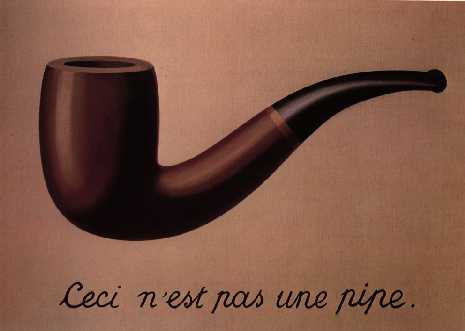
    René Magritte (1898-1967): This is not a pipe.

    Luigi Pirandello
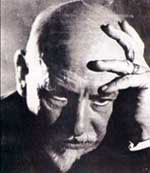


    Luigi Pirandello (1867-1936)

    - Born in Sicily
    - 1887-1991: University in Rome and Bonn
    - 1894: Marries Antonietta Portulano
    - 1904: first novel
    - 1914-17: Sons POW in WWI and wife growing insane
    - 1919: Wife in mental institution
    - 1921: Six Characters in Search of an Author
    - 1923: Henry IV; joined fascist party
    - 1934: Opera libretto criticized by fascist authorities;
    doesn’t support Mussolini’s march into Ethiopia 

    [I]n dramatic art, what is staging if not a huge,
    living illustration in action? What are the actors
    if not illustrators in their own right?
    But necessary illustrators in this case, alas. [ . . . ]
    Unfortunately, there always has to be a[n]
    unavoidable element that intrudes between the
    dramatic author and his creation in the material
    being of the performance: the actor” (Pirandello,
    “Illustrators, Actors, Translators,” Luigi Pirandell.
    Ed. Bassnett and Lorch. 26-7)


    Review of L. 15

    Purpose of reading Kafka, Pirandello, and Woolf:

    - What is Modernism?
    - How can we express “individualism” in the tide of
    ever-changing history?

    Modern Theater, Art, and Realism

    - Modernist questions: What is “reality”?
    What is the “self”?

    - Intersections between modern science,
    art, and perspectives

    - Nature of the drama: perfect to raise
    questions about the “self”

    Modern European Drama

    - Antonin Artaud (French)
    - Bertolt Brecht (German)
    - August Strindberg (Swedish)

    ‡ International movement experimenting
    with new forms of acting styles, stage settings,
    and the audience’s experience of “fiction” and “reality”

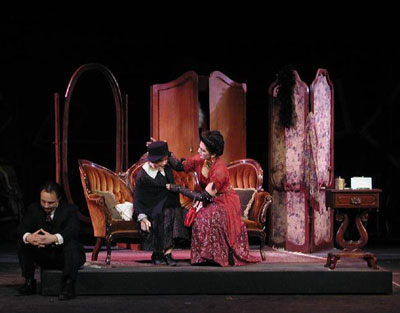
    Pirandello and Six Characters in Search of an Author

    - Surrealist quality
    - Freud: Crisis of family relations
    - Modernist realism: open-ended, fractured,
    Cubist, and open to interpretation

    Purpose of Midterm Essay:

    - To practice writing from a Freudian or Marxist
    perspective, thus learning the values of “critique”

    - To practice documenting sources and synthesizing
    information

    - To build your own writing voice and identify areas
    for improvement

    Purpose of Final Research Project:

    - To learn the ideal process of a research project
    (Research Portfolio: prospectus, reading list, annotated bibliography,
    drafts = 20% of project grade)
     
    - To integrate cross-disciplinary knowledge

    - To write an original interpretation of “Modernism”
    using primary and secondary texts


    Review of L. 16

    1. What is biography?

    - A story of a notable person’s life when he or she has died
    - A way of commemorating great persons
    - 20th century: a way of weaving fact and fiction, or truth and personality

    2. Orlando as Biography

    - Comment on the ‘new biography’ (Strachey, Nicholson)
    - History of Vita Sackville West’s family
    - How can one narrate the journey and history of the self?

    ‡ Modernist agenda: Questioning of ‘fact’ and ‘fiction’


    Review of L. 18

    1) Women’s rights and Orlando

    - Property
    - Respect
    - Active engagement in public life

    2) Definitions of gender in Orlando

    - Socially constructed, non-essential

    3) The False Polarities

    - Outside / inside

    - fact / imagination
    - narrator / subject
    - surface / depths
    - masculine / feminine
    - day / night
    - life / death
    - waking / dreaming
    - nature / society


    Review of L. 20

    Orlando

    - Time is relative (Einstein)
    - Gender is fluid/socially constructed
    - “Reality” is equally fluid and subjective

    Research

    - Primary sources: First-hand accounts, diaries, laws,
    contemporary reports, literature, film, art

    - Secondary sources: Scholarly, peer-reviewed,
    refereed (check: bibliography? Academic authors?)


    - Strategies:

    - General research question: What motivates humans?
    How did it change in the early 20th century?


    Journal #5: Think back to our early discussions of Marx
    and Freud as well as incidental discussions about
    “Modernism” (Pirandello, Kafka).
    What aspects of Modernism does Woolf’s novel embody?


    Review of L. 21

    Orlando and Gender Stereotypes

    - The Victorian woman: wife, mother, daughter, or sister
    - Orlando and Shel: a non-traditional marriage

    Orlando and Modernism

    - Freud: dreams / expression of true, unconscious self
    - Multiple realities, selves
    - Time = relative; break with past(s) 
    - Cubism: No real ‘truth’ of object/subject available
    - Surrealism: Fantasy world = product of our dreams


    Review of L. 22

    Goals and Purpose of Next 2 weeks:

    - Establish a "Modernist" bibliography

    - Review the "greatest hits" of Modernism

    - Come to an understanding of what Modernism(s) is/are

    T. S. Eliot’s poetry:

    - City/metropolis

    - Post-WWI Angst

    - What is culture?

    - Time—eternal

    - What role does the past play in the present?

    - Classical myth


    Journal #6: What is the Waste Land? (For ex.: "The Waste Land is the modern world, which is a "heap of broken images," broken . . . )


    Review of L. 23

    The Waste Land

    - Modern world
    - Multilingual world
    - A world of broken images (in which Classical
    allegories have some relevance)
    - A lonely world
    - A world looking for a savior

    Dadaism (ca. 1912-1924):
    Tzara, Breton, Ernst, Duchamp, Richter,
    Arp, Huelsenbeck, Ball

    - Spontaneous art
    - Art that defies traditional definition, upsets, and confronts
    - Political agenda: vs. consumerism, bourgeois cooptation
    - Maxim: I don’t care about this petty world

    Surrealism (ca. 1924-1933): Breton, Ernst,
    Duchamp, Dali, Klee, Magritte, Miro

    - Dream-like art
    - Art that stems from the unconscious,
    unexpressed desires, and experimentation
    - Political agenda: vs. ‘rationality,’ conscious decision
    - Maxim: What is reality?


    Review of L. 24-25

    Caligari, Freud, Politics, and Modernism

    Freud
    - Distrust of hypnosis
    - Are we really in control over our actions?
    - The “uncanny”/doubling

    Politics
    - Marginalization of the ‘outsider’
    - Control over the (soldier’s) body
    - Is authority really to be trusted?

    Modernism
    - What is reality?
    - Who or what motivates us?

    WWI Poetry

    - 2 competing messages: 1) It’s honorable and
    “manly” to die for your country; 2) The reality
    of war is horrific and destroys young men.

    - Metaphors for war: drowning and the rat